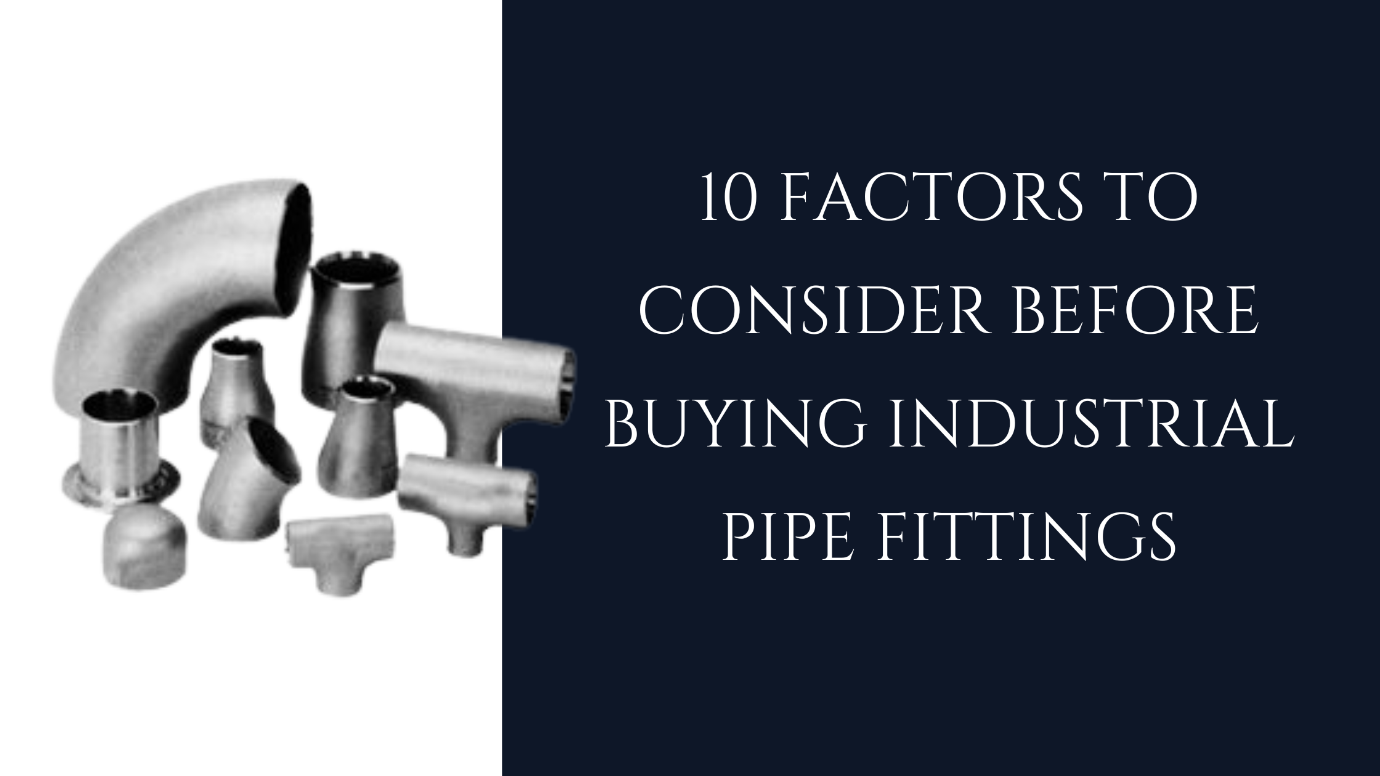
Forged Carbon Steel Flanges, Alloy Steel, Stainless Steel & Mild Steel Flanges & Pipe Fittings in different pressure rating as per ASA,BS,DIN,ISI,JIS and as per Customer's requirement.
10 Factors to Consider Before Buying Industrial Pipe Fittings
A practical, engineer-focused checklist to select safe, compliant and cost-effective pipe fittings
Choosing the right pipe fittings is one of those decisions that looks small on paper but can make or break a plant’s performance. The wrong material, a mismatched pressure rating, or an ill-fitting connection can cascade into leaks, downtime, and safety risks. Below are 10 practical factors to guide your purchase, straightforward, industry-focused and written with the realities of engineering in mind. IP Corporation's manufacturing experience informs several of these points. Offering one of the best guides for making an informed buying decision for Industrial Pipe Fittings...
1. Chemical Compatibility
Match materials to the fluids they'll contact. Acids, chlorides, solvents and alkalis attack materials differently - stainless steels, duplex, nickel alloys or polymer linings may be required depending on exposure.
2. Pressure Rating & Class
Always select fittings rated for your system's maximum operating pressure plus a safety margin. Verify flange and fitting pressure classes (e.g., PN/ANSI classes) so joints won't become weak points.
3. Temperature Tolerance
High or low temperatures change material strength and sealing behavior. Ensure the chosen grade retains mechanical properties across the full operating range.
4. Material Grade & Mechanical Strength
Beyond corrosion resistance, consider tensile strength, impact resistance and hardness. For demanding services, duplex stainless or alloy steels often outperform standard 316/316L.
5. Standards & Certification
Insist on fittings produced to recognized standards (ASME, DIN, BS EN, JIS, ISI) and certifications such as ISO 9001:2015 or IBR where applicable. Compliance ensures dimensional accuracy and traceable quality.
6. Dimensional Tolerances & Fitment
Tolerances affect welding, bolting and sealing. Precision-manufactured flanges and fittings reduce installation time and the risk of misalignment, important for high-pressure and rotating equipment connections!
7. Welding & Joint Type
Decide between butt weld, socket weld, threaded or flanged connections based on service conditions and maintenance access. Each joint type has trade-offs in strength, leak potential and ease of assembly.
8. Coatings, Linings & Surface Finish
External coatings protect against atmospheric corrosion; internal linings prevent chemical attack or contamination. Surface finish (Ra value) matters in hygienic and high-purity applications.
9. Lead Time, Supply Chain & After-Sales Support
Availability can be a project-critical factor. Choose suppliers who maintain inventory, deliver on schedule, and offer technical support-especially for custom or exotic alloy fittings. Many global buyers rely on established partners for this reliability.
10. Total Cost of Ownership (TCO)
Don’t judge by purchase price alone. Factor in maintenance, replacement frequency, downtime costs and energy losses. Investing in the right material and design up front often yields lower TCO.
Ready for some final thoughts...
Buying pipe fittings is engineering, not shopping! Make your decisions with data-chemical charts, pressure-temperature ratings and supplier test records. If you need a credible partner for material selection, traceability, and on-time delivery, IP Corporation's decades of experience in flanges and fittings can help simplify the choice and safeguard performance.
Need quick info beyond these factors for your procurement team? Connect with our team today!